Brakes
When brake rotors need replacement
How measurements, damage, wear patterns, and vehicle specifications turn a brake symptom into a responsible rotor decision.
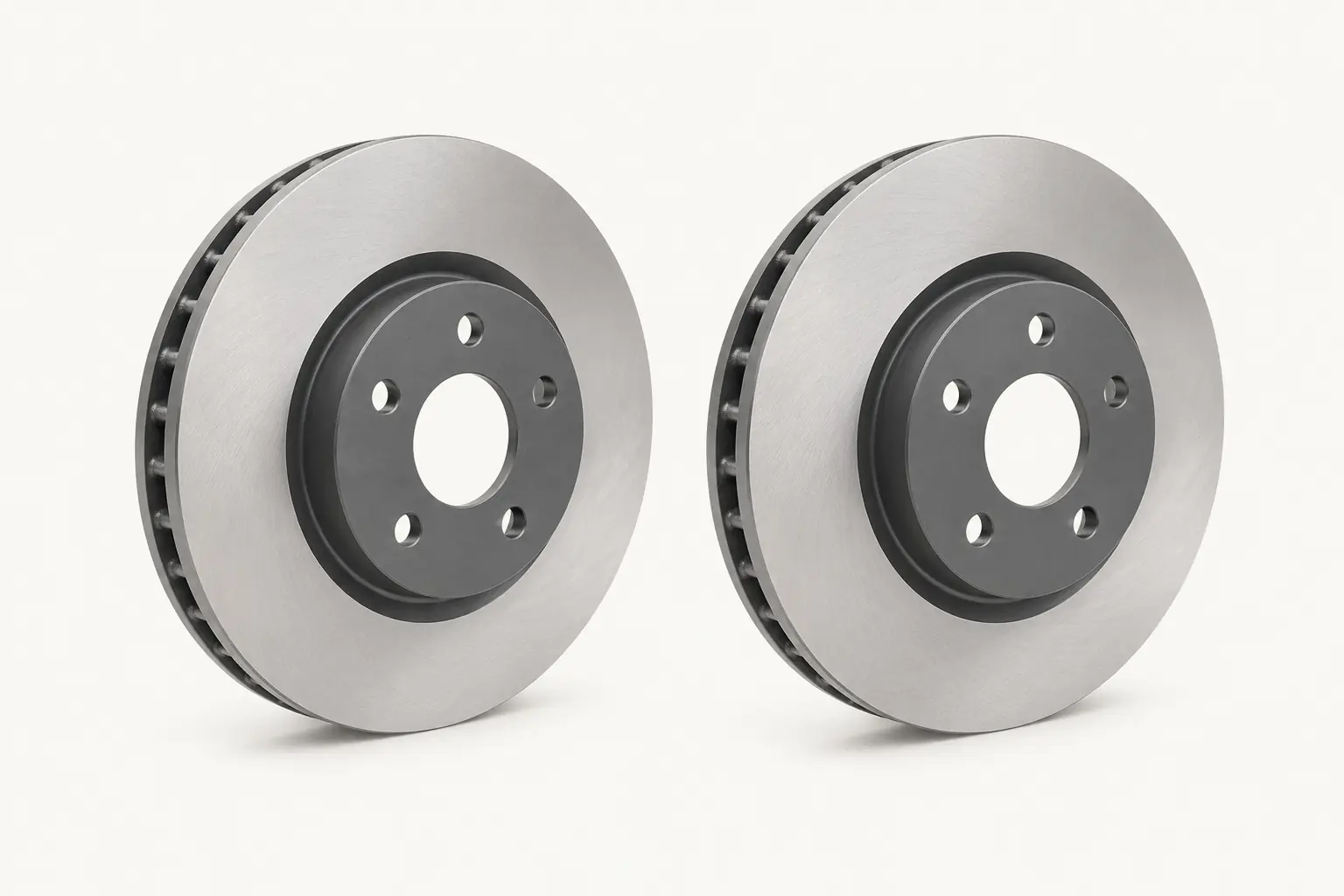
Key takeaways
- Rotor replacement is based on measured service limits and condition—not mileage alone.
- Thickness at or below the marked minimum, cracks, serious heat damage, or other out-of-spec conditions require action.
- Vibration or noise is a reason to inspect the whole brake and wheel-end system, not proof that rotors alone are defective.
Inspect before deciding
A useful rotor decision combines visual inspection, thickness measurements at several positions, and any runout or thickness-variation checks specified for the vehicle. Compare the lowest valid measurement with the MIN TH marking on the rotor or the current service specification. Measure away from the unworn outer lip with the correct tool.
Inspect both sides of each rotor and both wheels on the axle. Inner faces can corrode or score differently, and uneven pad wear can point to caliper slides, pistons, hoses, hardware, or installation issues that a rotor-only purchase will not correct.
Conditions that usually require replacement
Replace a rotor when it is at or below the applicable minimum thickness, has cracks, deep scoring, serious braking-surface corrosion, significant heat spotting or blue areas, or deformation outside the allowed specification. Follow the vehicle or brake manufacturer’s instructions for contamination and for any permitted refinishing.
Do not machine a rotor automatically. Some applications limit or do not recommend refinishing, and the finished rotor must still satisfy every minimum-thickness and surface requirement. A qualified technician should determine whether machining is permitted and worthwhile.
Symptoms guide inspection—not the parts order
Pedal pulsation, steering-wheel shake, scraping, squealing, pulling, overheating, or a burning smell needs timely diagnosis. Similar symptoms can originate in pad deposits, hubs, wheel bearings, tires, suspension, corroded mounting surfaces, sticking calipers, or incorrect wheel-nut tightening.
Rotors are generally serviced as a left-right axle pair with a compatible axle set of pads. Confirm position, brake package, dimensions, coating, included quantity, hardware, and sensors. If braking changes suddenly, warning lights appear, fluid leaks, a wheel becomes very hot, or grinding is present, obtain qualified inspection or roadside help.
- Measured thickness and marked minimum
- Cracks, scoring, corrosion, heat damage, and surface condition
- Runout or variation checks required by the service procedure
- Caliper, pad, hub, bearing, and mounting-surface condition
- Matched axle quantity and exact brake-package fitment
References
Sources and published site policy
- Brembo — Minimum brake rotor thicknessBrake-manufacturer guidance on taking several measurements and comparing the lowest result with the rotor’s marked minimum.
- Brembo — When to replace brake rotorsManufacturer examples including minimum thickness, deep scoring, cracks, heat marks, and braking-surface deformation.