Brakes
Brake pads only—or pads and rotors?
A condition-first checklist for deciding what belongs in the brake job before comparing prices.
Key takeaways
- Do not decide from mileage alone; inspect pad wear, rotor condition, and the vehicle specification.
- Pads alone may be reasonable only when the rotors remain safely serviceable and compatible with the new pads.
- Replace rotors as an axle pair when they are below the marked minimum thickness or otherwise unserviceable.
Start with the condition, not the shopping cart
Brake pads are friction material; rotors are the surfaces they clamp. They work as a system, but that does not mean every pad replacement automatically requires new rotors. The right scope depends on measured rotor thickness, surface condition, runout where applicable, pad wear, and the manufacturer’s service limits for the exact vehicle.
Before pricing the job, have both sides of the axle inspected. A single outside pad does not show the full picture: inner and outer pads can wear differently, and the left and right sides can reveal a sticking caliper or hardware problem that a parts purchase alone will not solve.
When pads alone may be reasonable
A pads-only job can be reasonable when the rotors are comfortably above their minimum service thickness, have no cracks or serious heat damage, and have a surface that can be reused according to the vehicle and brake-part manufacturer’s instructions. Pedal feel, noise, and braking behaviour should also be considered during diagnosis.
Do not assume that a rotor is acceptable because it looks smooth from outside. Thickness must be measured with the correct tool, away from the unworn outer lip, and compared with the value stamped on the rotor or listed in the service information.
When pads and rotors belong together
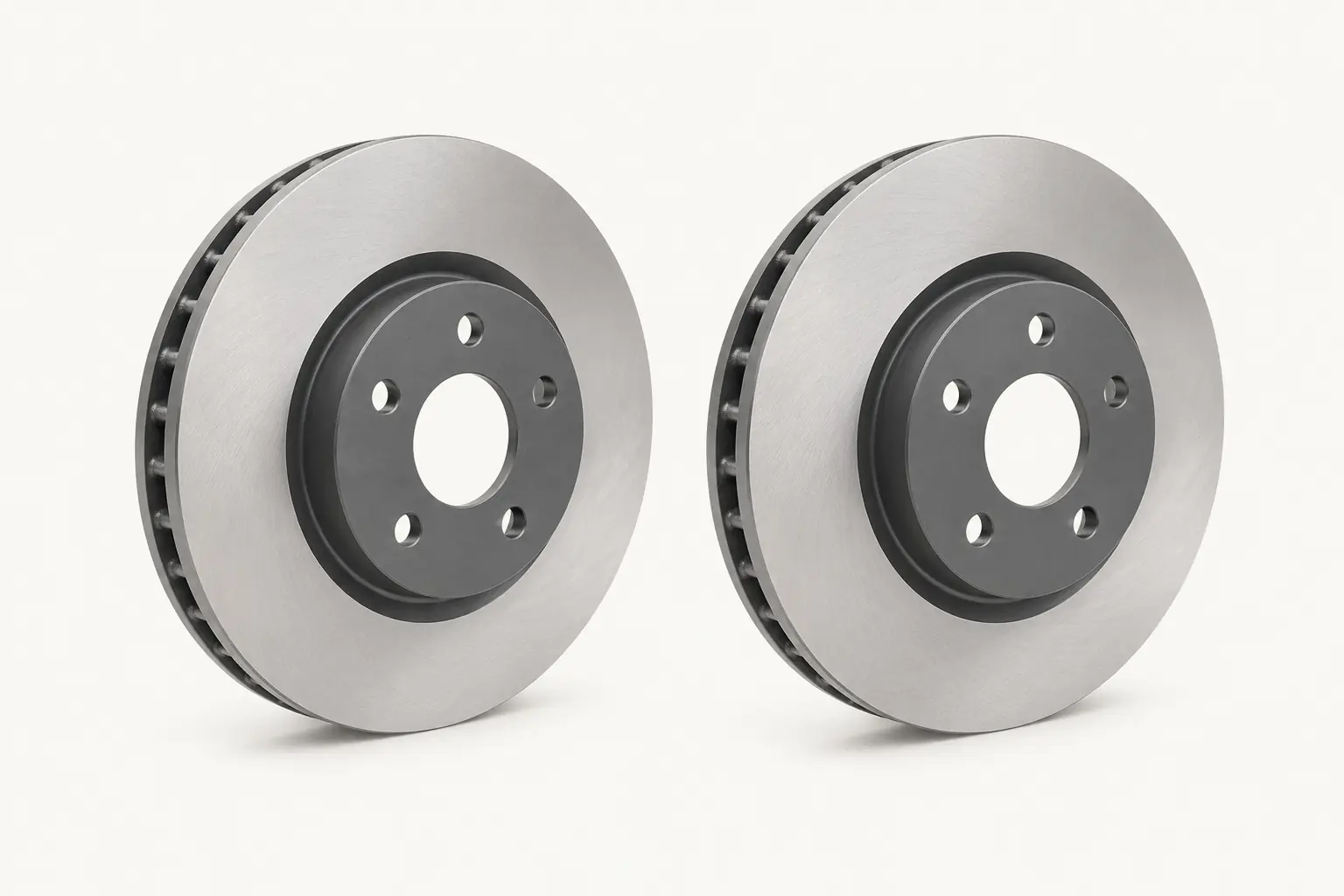
New rotors are normally part of the job when a rotor is at or below its minimum thickness, cracked, deeply scored, severely corroded on the braking surface, heat damaged, or outside an allowed runout or thickness-variation specification. A qualified inspection should distinguish a rotor problem from tire, wheel, hub, suspension, or caliper issues that can produce similar symptoms.
Rotors are generally serviced in axle pairs so the left and right brakes share comparable components. Pads are also normally purchased as an axle set. Confirm the box quantity: a listing for one rotor is not automatically a pair, while a pad set usually covers one axle—but the retailer’s listing controls.
What to put in the comparison
Compare the complete repair, not a single headline price. Include the correct front or rear pad set, the required number of rotors, hardware or wear sensors when specified, shipping, duties, taxes, return terms, and any labour that changes with the chosen scope.
- Front or rear axle—and the correct brake package
- Rotor diameter, thickness, height, hub, and bolt pattern
- Pad shape, friction specification, clips, shims, and sensor provisions
- Quantity per box and total delivered cost for the complete axle
References
Sources and published site policy
- Brembo — Minimum brake rotor thicknessManufacturer guidance on measuring and comparing rotor thickness with the marked minimum.
- Brembo — When to replace brake rotorsExamples of rotor conditions that call for replacement and general bedding guidance.