Maintenance
Common automotive filters and when to replace them
A vehicle-specific way to plan oil, engine-air, cabin, fuel, and transmission-filter service without relying on one universal mileage.
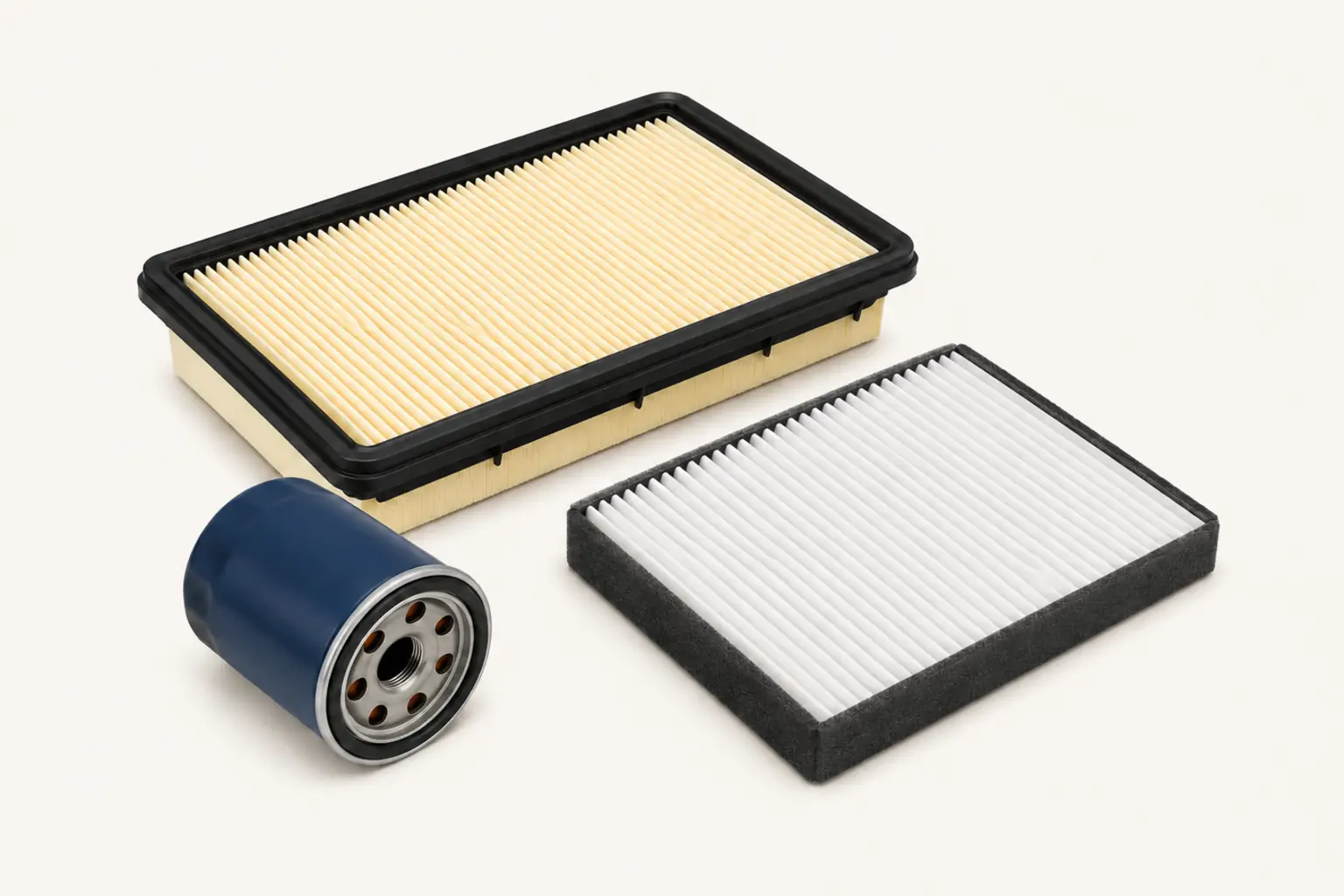
Key takeaways
- There is no single replacement interval that is correct for every filter and every vehicle.
- Use the exact owner manual or maintenance system, then apply severe-use guidance only when its conditions match.
- Confirm the filter by engine, production details, dimensions, and current part number before ordering.
Start with the vehicle schedule
Filter intervals vary by model year, engine, market, filter type, and operating conditions. Some vehicles use fixed time or distance tables; others calculate service from oil life or operating conditions. The owner manual, maintenance supplement, or in-vehicle system for the exact vehicle is the controlling starting point.
Do not copy an interval from a different model or treat a retailer reminder as the manufacturer schedule. Dust, gravel roads, heavy traffic, extended idling, short trips, towing, and extreme temperatures can trigger vehicle-specific severe-use instructions—but each manufacturer defines those conditions differently.
Oil, engine-air, and cabin filters have different rules
The engine-oil filter is normally serviced with the oil according to the specified oil-life message or interval. Confirm the filter, oil specification, capacity, drain-seal needs, and reset procedure. A longer advertised filter life never overrides the vehicle’s oil-service requirement.
The engine-air filter protects the intake; the cabin filter serves heating, ventilation, and air-conditioning airflow. Follow each scheduled inspection or replacement point and its dusty-condition exception. Weak airflow, odour, poor running, or warning messages can have causes beyond a filter, so diagnose symptoms instead of replacing parts by guesswork.
Fuel and transmission filters require exact service information
A fuel filter may be an external service item, part of a diesel fuel-and-water system, or integrated into a tank module with no routine interval. Transmission filtration can be external, internal, or handled through a manufacturer-specific fluid service. Do not add either filter to the cart until the exact powertrain information confirms it.
Build the order from the current part number and complete service scope. Include required seals, O-rings, housing caps, drain washers, approved fluid, and disposal needs, then verify whether priming, bleeding, fill-temperature, torque, or scan-tool procedures apply.
- Exact year, engine, market, and production split
- Manufacturer interval or maintenance-system message
- Normal-versus-severe operating-condition rule
- Filter dimensions, media, seals, and quantity
- Required fluids, hardware, tools, and reset procedure
References
Sources and published site policy
- Honda — Maintenance MinderA manufacturer example showing condition-based service codes and shorter filter guidance for specified dusty or high-soot use.
- Toyota Canada — Parts and filtersManufacturer guidance to inspect filters at the interval in the exact Toyota maintenance schedule and replace them when needed.
- Ford — Scheduled maintenance exampleAn owner-manual example showing that cabin, engine-air, fuel, and monitored filters can follow different rules.