Fitment
How to verify that a part fits your vehicle
A repeatable process for moving from vehicle identity to an exact, retailer-confirmed part number.
Key takeaways
- Year, make, and model are a starting point—not a complete fitment check.
- Use the VIN to confirm vehicle identity, then cross-check the exact configuration and part number.
- A marketplace keyword match or seller title is not proof of compatibility.
1. Build a precise vehicle profile
Record the model year, make, model, engine, trim, transmission, drivetrain, body style, and market. Depending on the component, production date, assembly plant, brake package, wheel size, emissions family, or option code can change the correct part.
Use the registration, door-jamb label, owner documentation, or manufacturer information rather than guessing from appearance. Two vehicles with the same badge can use different parts because they were built at different plants or equipped with different packages.
2. Decode the VIN—but know its limit
A 17-character VIN can confirm core identity details such as model year, manufacturer, model, and assembly information. NHTSA’s vPIC decoder uses manufacturer-submitted data and is a useful cross-check, especially when a listing or registration description is incomplete.
A decoded VIN is not automatically a part catalogue. It may not expose every option code or mid-year production change required for exact fitment. Treat it as vehicle identification, then continue to the manufacturer or supplier catalogue for the part decision.
3. Match the component-specific details
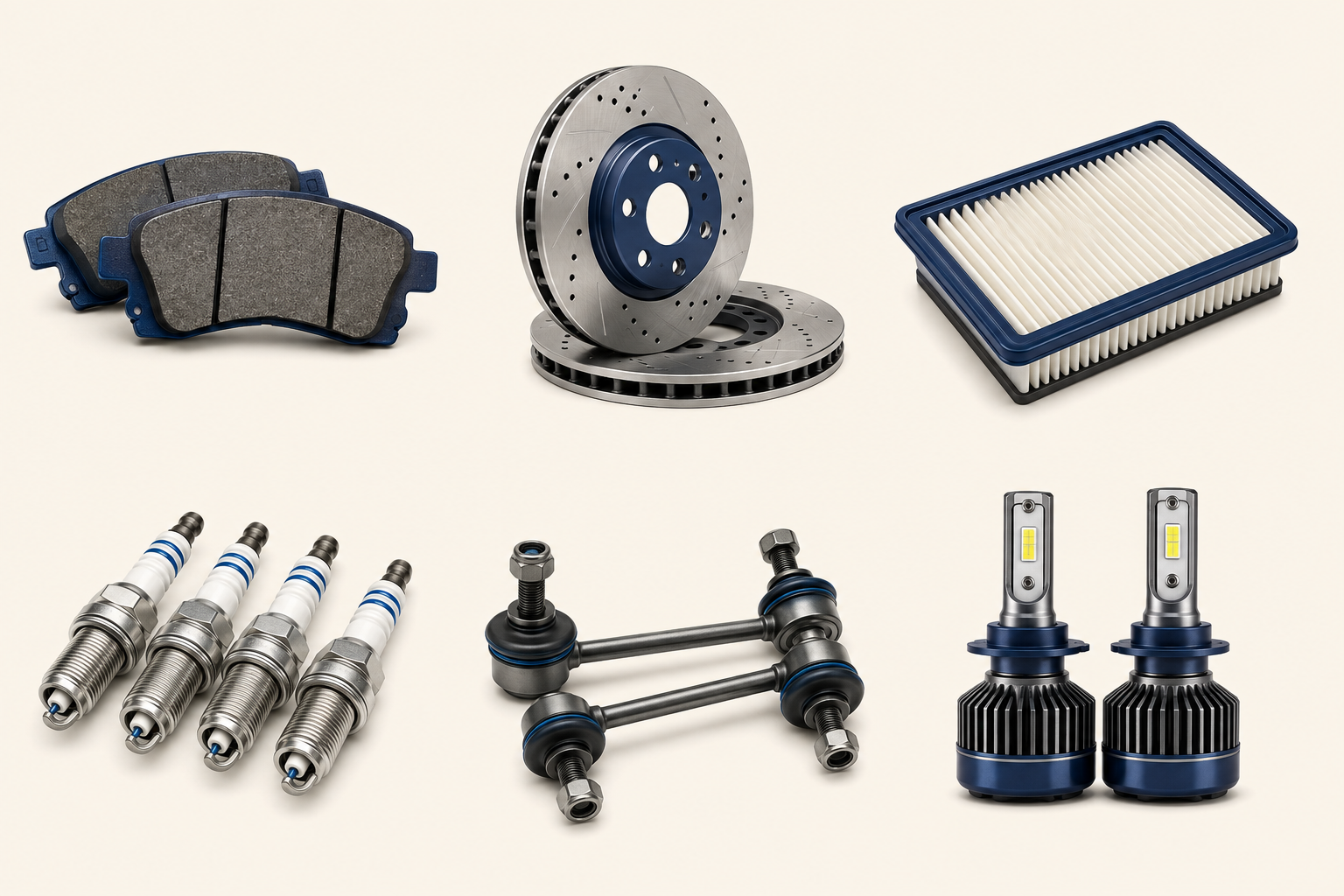
Fitment changes by component. A brake rotor may depend on axle position, diameter, thickness, hub dimensions, and brake package. A filter may depend on engine code and production date. A suspension part may depend on drivetrain, side, position, or a sport package. Electrical parts add connector, voltage, sensor, and programming considerations.
If a retailer offers a fitment note, read the qualifiers—not only the green check mark. Phrases such as ‘from production date,’ ‘except sport package,’ ‘front,’ ‘without sensor,’ or ‘VIN from’ are often the deciding information.
4. Cross-check before checkout
Use at least two compatible sources when possible: the vehicle or part manufacturer catalogue, a trusted supplier catalogue, an authorized dealer parts desk, or a retailer fitment tool that shows the qualifiers and exact part number. When sources disagree, stop and resolve the difference before buying.
- Confirm the exact part number, supersession, and included quantity
- Confirm front/rear and left/right position
- Read every fitment qualifier and seller note
- Check return eligibility before opening or installing the part
- Compare the received part with the original before installation
References
Sources and published site policy
- NHTSA — VIN DecoderOfficial access to vPIC vehicle information based on manufacturer submissions.
- Transport Canada — Vehicle recallsCanadian recall resources and VIN-based manufacturer lookup guidance.